
THE CONCEPT OF LOBBYING
A consistent definition of lobbying as a legal term does not exist, even in the United States, which is undoubtedly the birthplace of regulation related to legitimate and legal trade of influence. The reason for this is not only the fact that it is a relatively young and underdeveloped legal field, but also the political sensitivity that has always been associated with this concept.
Therefore, in comparative legislative practice, there is a wide range of definitions that often represent different forms of reservation and essential resistance from certain countries to introduce already established and widely accepted practice of trading influence into their legal system. Probably for this reason, lobbying is considered in some places as an activity aimed at the entire process through which a lobbyist protects the private interest of their client, as is the case in the United States[1], while in other places it is considered an activity that, at least for the purposes of a legal definition, is limited to the influence that begins with lobbying contact[2] with holders of public authority. There are also definitions that leave room for the possibility that lobbying may or may not be limited to lobbying contacts[3]. This distinction is not without practical significance, as the timing of the start of lobbying is crucial when applying the law to any individual case.[4]
In any case, the author’s position is that it is more accurate to associate the concept of lobbying with the entire relationship between the lobbyist and the user of lobbying services, which begins with the engagement of the lobbyist and includes all activities that the lobbyist undertakes on behalf of the lobbying client. This does not mean that the legal terminology characteristic of European countries, which limits the concept of lobbying to the activities of the lobbyist undertaken from the moment of the first lobbying contact, is incorrect. [5]On the contrary, if in countries where legal formalism is a tradition, lobbying were to be considered as actions taken before the first contact with the lobbied person, it would not only hinder the effectiveness of control but also pose a potential risk that this institute would never materialize in practice.
Despite the previous remarks, the general definition of lobbying should be broader. In this sense, lobbying would represent a legally permitted activity through which, in order to achieve private interests, a variety of actions, including exerting influence on holders of public authority, are carried out to change or attempt to change the form or content of aspects of a specific legal system, or to prevent changes that would occur in the normal course of events.[6]
LOBBYING AND PUBLIC ORDER IN THE REPUBLIC OF SERBIA
The adoption of the Lobbying Law [7]introduced a tectonic shift in the legal system of the Republic of Serbia. While integrating new institutes into the legal framework is not uncommon, especially in a country that continuously harmonizes its legislation during the EU accession process, few have had the potential to influence such a significant change in the understanding of public order. This certainly does not mean that the Lobbying Law will, by itself, lead to a change in societal consciousness, but the values of public order, through the application, and even the simple validity of this law, will undoubtedly be different, at least in a theoretical sense. The central focus of this change is the relationship towards the trade of influence.
The point is that social influence itself, and especially in relation to holders of public authority, was considered an intangible asset [8]until the adoption of this law, which was outside legal transaction, while the trade of influence was considered a criminal offense. [9]Regardless of the underdeveloped case law, which has not yet drawn clear boundaries between acceptable and unacceptable behaviors, it is indisputable that the requirement of public order is aimed at a full range of responsibilities that should accompany the use of social influence for anyone who possesses such an opportunity. However, it is hard to find clear boundaries and parameters based on which it is possible to determine in what manner social influence is permitted to be used. This problem does not only exist in Serbia but also in countries where legal certainty is at a much higher level, such as the United States, where the term “honest service fiduciary duty” is still considered a vague and underdeveloped legal doctrine.[10]
At the time of writing this text, the trade of influence, in its current form, is still considered a criminal offense under the legal system of the Republic of Serbia. This specifically means that anyone who demands or receives a benefit for themselves, either directly or through a third party, by using their social position or actual or presumed influence, in order to mediate or influence the execution or non-execution of an official act, must be punished under the law for committing a criminal.
A detailed analysis is not necessary to conclude that by criminalizing the trade of influence, the state’s public order is in contradiction with itself. A lobbyist is presumed to work in their personal interest and must receive a benefit for doing so. They use their social position as a lobbyist, as well as their real or presumed influence, which is the very essence of lobbying activity. Ultimately, they mediate to ensure the implementation of specific norms into general acts, which are then officially carried out by the relevant official or the “lobbied” person. Does this then mean that individuals engaged in lobbying activities should be excluded from the circle of potential offenders?
Given that the boundaries between the two laws are not only unclear but not even determined, the question arises whether the adoption of the Lobbying Law has decriminalized the trade of influence or if it was decriminalized only for lobbyists?
The list of uncertainties does not end here, as the term “lobbyist” encompasses the vast majority of citizens who have some influence, even though they are not public authorities – of course, provided they are engaged in lobbying. Due to the term “unregistered lobbyist,” [11]potential lobbyists include all legal representatives of legal entities, all employees in these entities, and even all individuals who represent the interests of these entities. The following question can be legitimately raised: who can commit the criminal offense of influence trading with such a positive-legal definition of the offense? The answer is self-evident – either no one or everyone. This is quite dangerous for legal certainty and legal predictability, at least when it comes to lobbying.
This legal confusion must certainly be resolved through amendments to both the Lobbying Law and the Criminal Code. There is, of course, the possibility that the public authority responsible for this matter, [12]through interpreting the law in a specific case, may currently and de facto introduce some degree of legal certainty. However, relying on this possibility turns an already slippery slope into an even riskier one.
At the same time, we must not lose sight of the fact that even after harmonizing legal texts and, hopefully, successfully aligning regulations on lobbying with the rest of public order, the question remains regarding the practical application of these regulations, particularly in the principle of protecting the public interest, which will be further discussed in the analysis below.
THE PRINCIPLE OF PROTECTING THE PUBLIC INTEREST FROM THE LOBBYING LAW
The Lobbying Law stipulates the obligation of the lobbying target to prevent harmful consequences that may arise for the public interest due to lobbying[13]. This obligation has been promoted into a legal principle, meaning it creates the framework in which all provisions of the law must be interpreted.
It seems that the legislator employed legal techniques and terminology characteristic of administrative procedures, as the formulation of this principle is not only very similar to the formulation of the principle of protecting the rights of parties and ensuring the public interest, but the article of the law promoting this principle is also identical[14]. One could even argue that, in terms of the subject of protection, there is an identity — both cases concern the duty of an official [15]to prevent harmful consequences to the public interest. However, in administrative procedures, this responsibility is secondary, whereas in lobbying procedures, it is the sole responsibility of the public authority holder.
There is a subtle difference between these two principles. Specifically, the principle in administrative procedures promotes the idea that citizens’ rights should not be exercised at the expense of the public interest, while the principle of lobbying acknowledges that lobbying can result in harmful consequences for the public interest. While an authority in administrative procedures can certainly prevent the exercise of rights that would harm the public interest, it seems that a lobbied individual does not have the same power. Instead, they can only prevent the harmful consequences that might arise from lobbying. In other words, in administrative procedures, the cause is prevented, whereas in lobbying procedures, the focus is on preventing the consequences. This could imply two things: either lobbying is seen as an inherently negative activity, contrary to the public interest, which cannot be prevented as such, or the legislator believes that lobbying serves the public interest, but that its implementation brings certain negative consequences that need to be addressed. We believe that lobbying, when not aimed at protecting the public interest, cannot have harmful consequences, as it would likely fail in such cases. If harmful consequences do occur, they would most likely arise only in instances of corruption.
However, if we set aside the previous considerations and focus on the essence of the principle, we can conclude that it is an obligation that is identical in both procedures. Since the legislator, through the Lobbying Law itself, has excluded the application of the General Administrative Procedure Law by stating that the provisions of this law apply only to the procedure related to the registration and removal from the Lobbyists’ Register, [16]it can be assumed that, despite the identical content of both principles, their practical implications are different.
These differences stem from the lack of regulation regarding actions in the lobbying process, which is limited to the initial lobbying contact, unlike the administrative procedure, which is very detailed in its legal regulation. This means that there are no substantial limitations on the actions of the lobbyist or the lobbied individual in the lobbying process itself. Of course, there is legal regulation that sets boundaries for both the lobbyist [17]and the lobbied individual[18], but this regulation does not apply to the means available to the lobbyist in the lobbying process, nor to the obligations of the lobbied individual regarding the measures taken by the lobbyist.
All of this has a direct implication for the content of the principle of protecting the public interest in the lobbying procedure — it is not a corrective in the application of legally prescribed or discretionary powers, but rather a corrective to the way the lobbying individual thinks (or fails to think). Therefore, for the purposes of the Lobbying Law, this principle takes on a more moral and personal component, which, in a way, diminishes the principle itself, to use Montesquieu’s terminology.[19]
The assumption is that the lobbying target genuinely intends to protect the public interest in the lobbying procedure. However, the essence of lobbying is precisely the demonstration that the public interest is achieved through the subject of the lobbying. Therefore, there is no conflict between individual rights and the public interest, as is the case, not only in administrative procedures but also in the constitutional regulation of the public interest. [20]Moreover, the positive-legal concept of the public interest[21], established under the direct influence of the European Convention on Human Rights and Fundamental Freedoms, and indirectly by the American legal tradition, is defined in relation to individual rights.
In lobbying, the only potential conflict is between the lobbyist’s and the lobbying target’s views on what constitutes the public interest in a given case, or whether the lobbyist’s argument is sufficient to convince the lobbying target that the lobbying serves public interest.
If we consider the hypothetical scenario where the lobbyist has significant resources and concentrated focus on the subject of the lobbying, it is logical to conclude that the argument of public interest presented by the lobbyist to the lobbying target will have the potential to determine the public interest in a particular case. The key role of argumentation in determining the public interest is not a new motive, even in literature[22], and this relationship is also one of the fundamental points of eternal disputes in historical science.[23]
In this context, we must also consider the pervasive, non-selective identification of the public interest with the views of the European Court of Human Rights. This phenomenon, which in practice often leads to internal confusion within the legal system, has not been identified by legal science as a cause of dysfunctionality in certain institutes, likely because it is grounded in the constitution itself. [24]It is not disputed that the European Convention on Human Rights and Fundamental Freedoms is part of the internal legal order, that the views of the European Court are binding when it comes to the relationship between basic human rights and the public interest, and that the European Court has the capacity to assess the public interest of individual signatories of the European Convention in any given case, even regarding laws. What is disputed, and what is most evident in the principle of public interest in lobbying procedures, is precisely the lack of creativity in assessing the public interest in cases where there is no need or possibility to find this concept in the views of the European Court of Human Rights — the public interest in this case is a value that exists in itself and may, but does not have to, be related to individual rights, let alone individual judgments.
PROTECTION OF THE PUBLIC INTEREST THROUGH FUNCTIONAL AND LEGALLY BASED LOBBYING
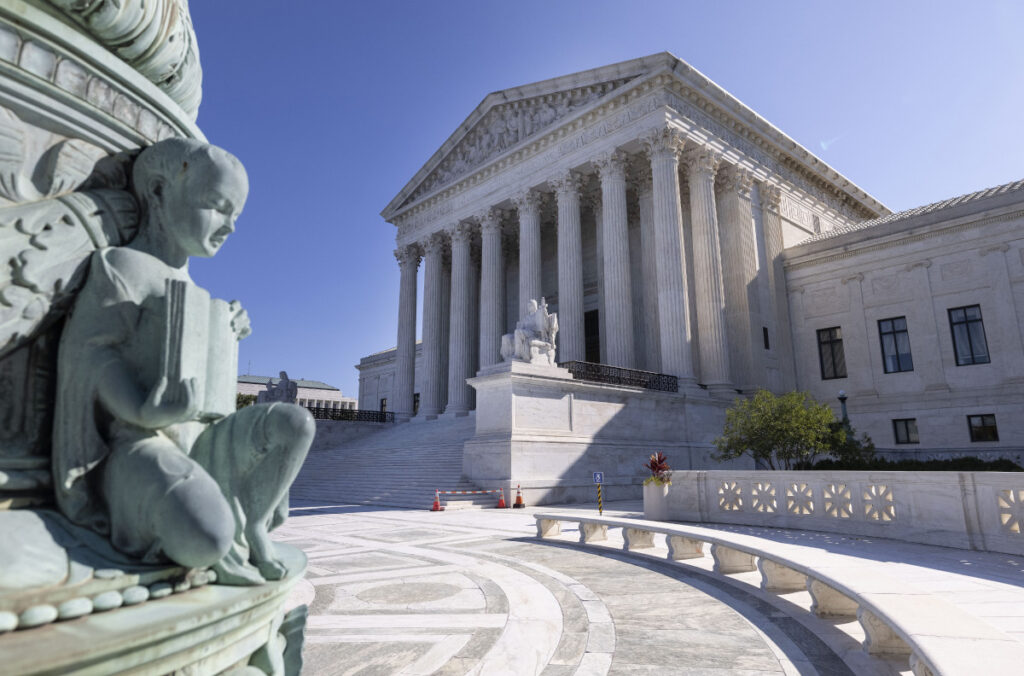
At the time of writing this text, the procedure in the case of Percoco v. The United States had just concluded before the U.S. Supreme Court. The case was initiated by a former lobbyist, who later became a public office, and was convicted for accepting bribes. The case was based on an event in which Joseph Percoco, the former advisor to Governor Cuomo, received money as a lobbyist for an action he later took as a public official. The question raised in this case was as follows: Does a citizen, who is neither an elected official nor employed in public authorities, but has informal influence on decision-makers, have an obligation to protect the public interest, and can such a person be convicted of abuse of power? [25]The ruling was overturned, and the case was remanded for a new trial, but without a clear answer to the limits of public interest and the right of individuals to engage in lobbying.[26]
Analyzing the behavior of the Supreme Court justices, including their comments directed at the lawyers for Percoco and the state, it was already apparent during the public discussion that the ruling convicting Percoco would be excluded from the legal framework. [27]Indeed, the justices’ concern that such convictions could blur the line between lobbying and criminal offenses was so evident that it was clear how the guardians of public order and public interest approach lobbying. Without delving into the relationship between the stance taken in the Skilling[28] decision and the Percoco decision, we can conclude that, at least in the U.S., preserving the institution of lobbying within the legal system is itself a public interest. It is less important whether the emphasis is placed on personal freedom, legal certainty, or the need to control a phenomenon that will always exist in practice as part of public order.
This does not, of course, mean that lobbying is always a desirable social phenomenon. For instance, when it comes to legal assistance provided in the U.S. by the Legal Services Corporation.[29] there are significant restrictions on lobbying.[30] However, the existence of legally permissible lobbying as such is a public interest, primarily because it is a social phenomenon that cannot be eradicated but can be controlled.
For this reason, at least in Serbia, detailed legal regulation of lobbying procedures and the establishment of clear lines between permissible and impermissible activities in relation to specific manifestations of lobbying is essential.
The reasons for this are obvious. With the enactment of the Lobbying Law, which further elaborates the basic human right to petition under Article 56 of the Constitution of the Republic of Serbia, lobbyists and users of lobbying have gained legitimate expectations regarding the exercise of their rights. These legitimate expectations are accompanied by certain duties of the state, which is responsible for ensuring both the effectiveness of rights and a fair balance between rights and public interest in each individual case that involves the limitation of the right itself. This specifically means that the principle of protection must be characterized by proportionality between the demands of the public interest, on one hand, and the rights guaranteed to lobbyists and users of lobbying by the state, on the other. Although there may be cases in our legislative practice where the assessment of proportionality, instead of being regulated by law, is left to the discretionary judgment of public law officials[31], this cannot be considered a good solution. Therefore, detailed regulation, either through law or through an appropriate bylaw adopted to elaborate the legal norms determining proportionality, must be considered a necessity.
CONCLUDING STATEMENTS
The principle of protecting the public interest in lobbying procedures is a complex issue that cannot be simplified or reduced to the personal opinion of public authority holders in specific cases, both in theoretical and practical terms. The central aspect of this problem relates to the concept of honest service, which is insufficiently defined even in the U.S., leading some justices of the U.S. Supreme Court to criticize it. In Serbia, this issue is particularly significant, primarily because the lack of alignment between certain laws effectively prevents a more serious approach to the problem. However, the demands for legal certainty and the rule of law cannot be met without, at least in broad terms, addressing this issue. Therefore, it is necessary for state authorities, particularly the Anti-Corruption Agency, to first focus on defining the boundaries of honest service in lobbying procedures, and only then on all other aspects of this new and challenging area. In doing so, they will need full support from both academia and judicial practice, but, above all, from the lobbyists themselves, who will have the privilege of participating—through their lobbying contacts—in shaping what is considered the public interest in lobbying procedures.
Vojin Biljić
___________________________________________
[1] U tom smislu federalni Lobbying Disclosure Act, 104-65-DEC. 19,1995 109 STAT. 691 – The term “lobbying activities” means lobbying contacts and efforts in support of such contacts, including preparation and planning activities, research and other background work that is intended, at the time it is performed, for use in contacts, and coordination with the lobbying activities of others.
[2] As it is the case in Serbia.
[3] Article 4, paragraph 1, point 14 of the Slovenian Integrity and Prevention of Corruption Act (available at https://www.kpk-rs.si/defines lobbying as an activity carried out by a lobbyist, which could suggest that lobbying includes actions taken prior to the actual lobbying contact. However, in the same article, the concept of lobbying is limited to the actual lobbying contact.
[4] For example, in the case of the definition of lobbying that applies in the U.S. state of Connecticut, which includes requesting others to make a lobbying contact, we see that in this case, lobbying would begin not with the contact with the lobbied person, but with the person who will contact the lobbied individual: Lobbying” means communicating directly or soliciting others to communicate with any official or his staff in the legislative or executive branch of government or in a quasi-public agency, for the purpose of influencing any legislative or administrative action. Conn. Gen. Stat. Ann. § 1-91.
[5] The legal regulation of lobbying in European countries largely follows the OECD Recommendation on Principles for Transparency and Integrity in Lobbying https://legalinstruments.oecd.org/public/doc/256/256.en.pdf, which, in Article 3 of the Annex, contains a definition of lobbying that is linked to the lobbying contact.
[6] It is important to note that there is no principled reason why, within the framework of lobbying engagement, lobbying would not include, for example, an initiative for assessing the constitutionality of a law submitted to the constitutional court, which aims to open a space where, following a potential success in the case, lobbying in the narrower sense would take place.
[7] Sl.Glasnik RS,no.87/2018 and 86/2019
[8] The term is borrowed from court practice in the U.S., in that sense United States Court of Appeals for the Sixth Circuit in the United States v. Frost:” The court disagreed, ruling that “private” individuals, such as Frost and Turner, may commit mail fraud by breaching a fiduciary duty and thereby depriving a person or entity to which the duty is owed of the intangible right to the honest service of that individual…”
[9] In that sense Article 366 of the Criminal Law (Sl. Glasnik RS 85/2005, 88/2005-ispr.107/2005-ispr.72/2009, 111/2009,121/2012, 104/2013, 108/2014, 94/2016 i 35/2019)
[10] The dissenting opinion of Justice Gorsuch, joined by Justice Thomas, in the U.S. Supreme Court ruling Percoco v. United States, No. 21-1158:”…The Court found that the instructions given to the jury in this case were too vague. I agree. But in my opinion, the problem is much deeper because no set of instructions can fix things. To this day, no one knows what the term ‘abuse of honest service’ encompasses. And the constitutional requirement of due process does not tolerate this kind of vagueness in our law, especially when it is tied to the imposition of criminal sanctions. Vague laws deprive people of the ability to predict what consequences their actions will have…”
[11] Article 4 of the Lobbying Law.
[12] Ex: Agency for the prevention of corruption.
[13] Article 7 of the Lobbying Law
[14] Compare Article 7 of the Lobbying Law and Article 7 of the Law on general Administrative Procedure
[15] There are also cases where the lobbied individual is not a public official (e.g., a judge who is a member of the High Judicial Council, a member of parliament, etc.), but the assumption is that in most cases, the lobbied individuals will be public officials.
[16]Article 25 of the Law of Lobbying
[17] Law of Lobbying, Code of Conduct for participants in lobbying (SL.Glasnik RS, 53/19, 142/20, 4/21), Criminal Code etc.
[18] Law on Civil Servants (Sl.glasnik RS 79/2005, 81/2005 isp.83/2005,-ispr.64/2007, 67/2007-ispr.116/2008, 104/2009, 99/2014, 94/2017, 95/2018, 157/2020 i 142/2022) etc.
[19] In further detail, S. Montesquieu, The Spirit of Law
[20] The Constitution of the Republic of Serbia, as well as the European Convention on Human Rights and Fundamental Freedoms, define the public interest in the context of limitations on individual rights – this is especially true for fundamental human rights of a relative nature, such as the right to property, etc.
[21] The U.S. Supreme Court ruling Munn v. State of Illinois (1876), which established the public interest doctrine, traces its roots to the considerations of Lord Chief Justice Hale, which have been widely accepted for over two centuries.
[22] For example, this phenomenon is explained by Sienkiewicz’s character Kmicic to King Jan Kazimierz II: “…However, Raźwil invited me to his place and began persuading me. He proved to me, as clearly as two plus two equals four, that he had done the right thing, that it was the only way to save the ruined homeland. I can’t even repeat his reasons; they were so powerful, promising such happiness for the homeland. He could convince even someone a hundred times wiser, let alone me, a simple man, a soldier, he, that diplomat…” H. Sienkiewicz, The Deluge, Belgrade, 1979
[23] For some, the Constitution of 1869 is a great step forward, while for others, it is a defeat; the same applies to the Secret Convention, joining the Triple Alliance, etc. – what is common to all these debates, which will never be resolved, is the relationship between events and the public interest.
[24] This refers to Article 18 of the Constitution, which establishes the binding interpretation of provisions concerning human rights.
[25] https://www.scotusblog.com/case-files/cases/percoco-v-united-states/
[26] This right, in fact, stems from the right to petition, which is a fundamental human right guaranteed by constitutions, both in the U.S. and in Serbia.
[27] https://www.supremecourt.gov/oral_arguments/audio/2022/21-1158
[28] Skilling v. U.S. 561 U.S. 358(2010), Justice Ginsburg: „ …Bribes or kickback are the only situations in which the honest service doctrine may apply to prohibit the use of mails and wire to further fraudulent schemes. The doctrine should nor arise in situations when a public official or private employee engages in undisclosed self-dealing… “
[29] Legal Services Corporation Act (1974) 42 U.S.C. 2996-29961
[30] 45 CFR Part 1612- Restrictions on lobbying and certain other activities
[31] An example is the Law on Personal Data Protection.